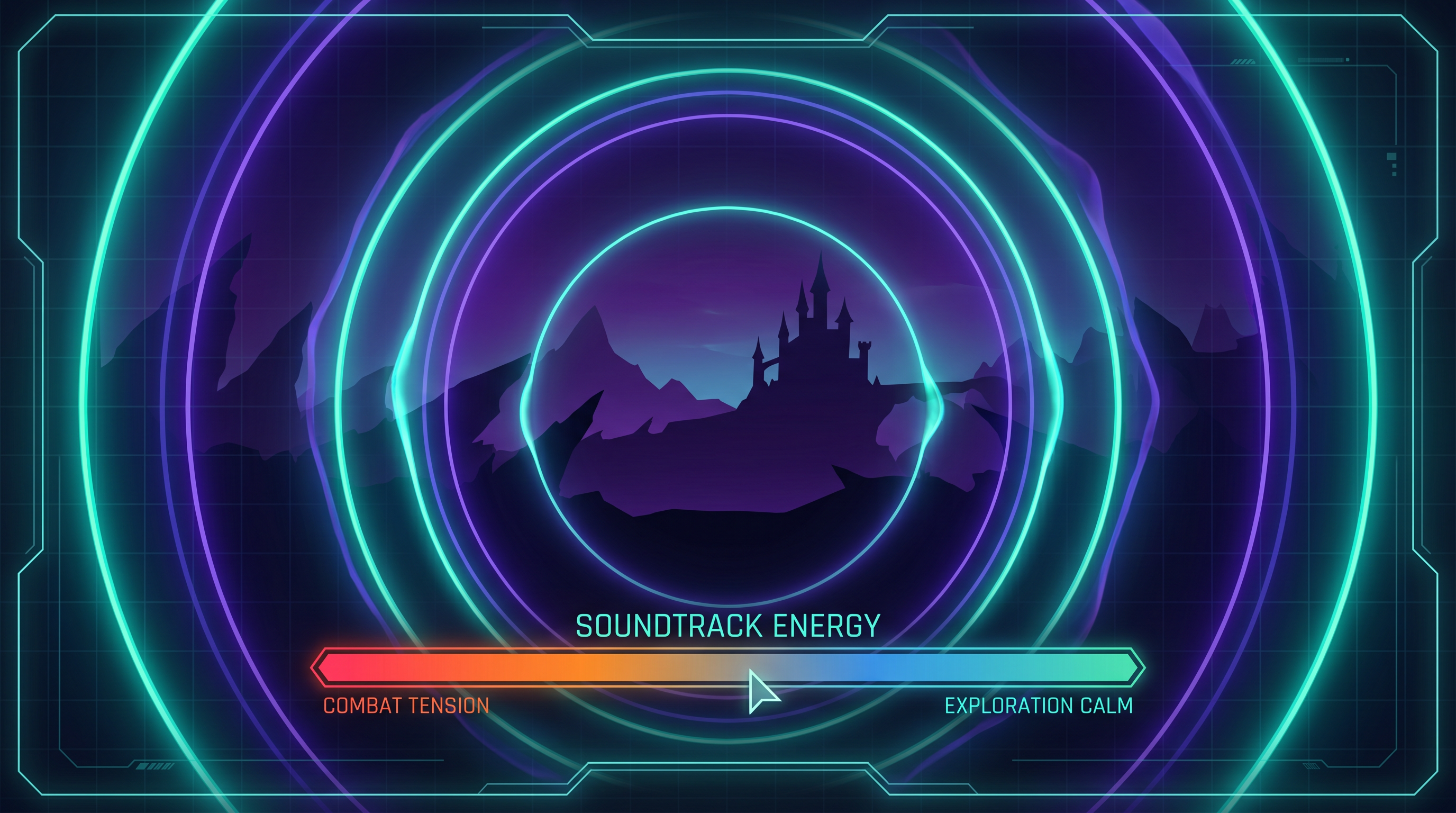
Games are interactive—music must survive repetition, state changes, and player emotion without annoying by hour three. AI music generation helps indie studios and solo devs prototype fast, fill content gaps, and ship when a dedicated composer isn't in the budget yet.
Core game music categories Main menu / title theme — memorable, not fatiguing on repeat; often 60–90 seconds that loop cleanly. Exploration / hub — low intensity, stable harmony, minimal surprises. Combat / tension — higher BPM, rhythmic drive, shorter phrases. Victory / achievement stingers — 3–10 second payoff; clear harmonic resolution. Game over / fail — short, distinct, not punishing to hear twice in a row.
Tag each generation for its role so you don't use a boss fight bed in the inventory screen.
Loops that don't bore Specify "loop-friendly 32-bar cycle," "minimal melodic variation," or "steady percussion grid." Avoid long through-composed bridges unless they're one-shot cinematics. Test loops for ten minutes while doing mundane tasks—if it grates, regenerate with sparser arrangement tags.
Adaptive audio (conceptual) Full adaptive scores need middleware (FMOD, Wwise) and stems. AI usually outputs stereo mixes—but you can generate layers separately: drums-only, pads-only, melody-off instrumental. Layer in-engine for simple intensity switches even without a full stem pipeline.
Genre fit by game type Puzzle and cozy games: lo-fi, acoustic, music box, gentle synth. RPG: orchestral swells, folk instruments, regional flavor matching setting. Arcade / mobile: bright hooks, short loops, instant energy. Horror: dissonance, sparse piano, industrial texture—tag "unsettling" with restraint so mixers can duck under SFX.
Cinematic moments inside games Cutscenes may need one-shot arcs with intro and outro. Use section markers in lyrics (if vocal) or tag "cinematic build 45 seconds" for instrumentals. Export the take that cuts cleanest to video.
Licensing and platforms Steam, console, and mobile stores care about rights. Use AI providers that permit commercial game release under their terms. Keep documentation. Don't prompt for recognizable franchise themes.
AAiMusic workflow for devs Generate dual takes for A/B in-engine. Use instrumentals under dialogue-heavy trailers. Aria helps when you need lore-friendly vocal chants or fictional language flavor text. Share work-in-progress with listen links for team review without sending builds.
Pitfalls Monolithic tags ("epic orchestral fantasy battle cinematic trailer") produce unusable mush. Ignoring loop points—edit-friendly generation saves programming time. Forgetting mobile speaker playback—many players never use headphones.
Summary Game music is functional art. AI gets you to fun, fast, and good-enough for ship—or to a prototype that justifies hiring a composer for the final boss theme. Direct it with role-specific tags and ruthless loop testing.
AAiMusic · Your imagination, your music
Keep reading
Related guides
 Industry & creators
3 min
AI Music for Indie Artists: Level the Playing Field
Why indie artists are turning to AI music—demos, full releases, and creative freedom without a big budget.
Read → Industry & creators
4 min
AI Music for Content Creators: TikTok, YouTube, Podcasts, and More
How creators use AI-generated music for Shorts, Reels, podcasts, and streams—workflow tips, quality checks, and why original AI tracks beat risky copyrighted clips.
Read → Industry & creators
3 min
AI Instrumentals: Background Music for Videos, Streams, and Projects
Create royalty-friendly instrumental beds with AI—tempo, mood, and genre tags that work for tutorials, games, and ambient content without vocals.
Read →