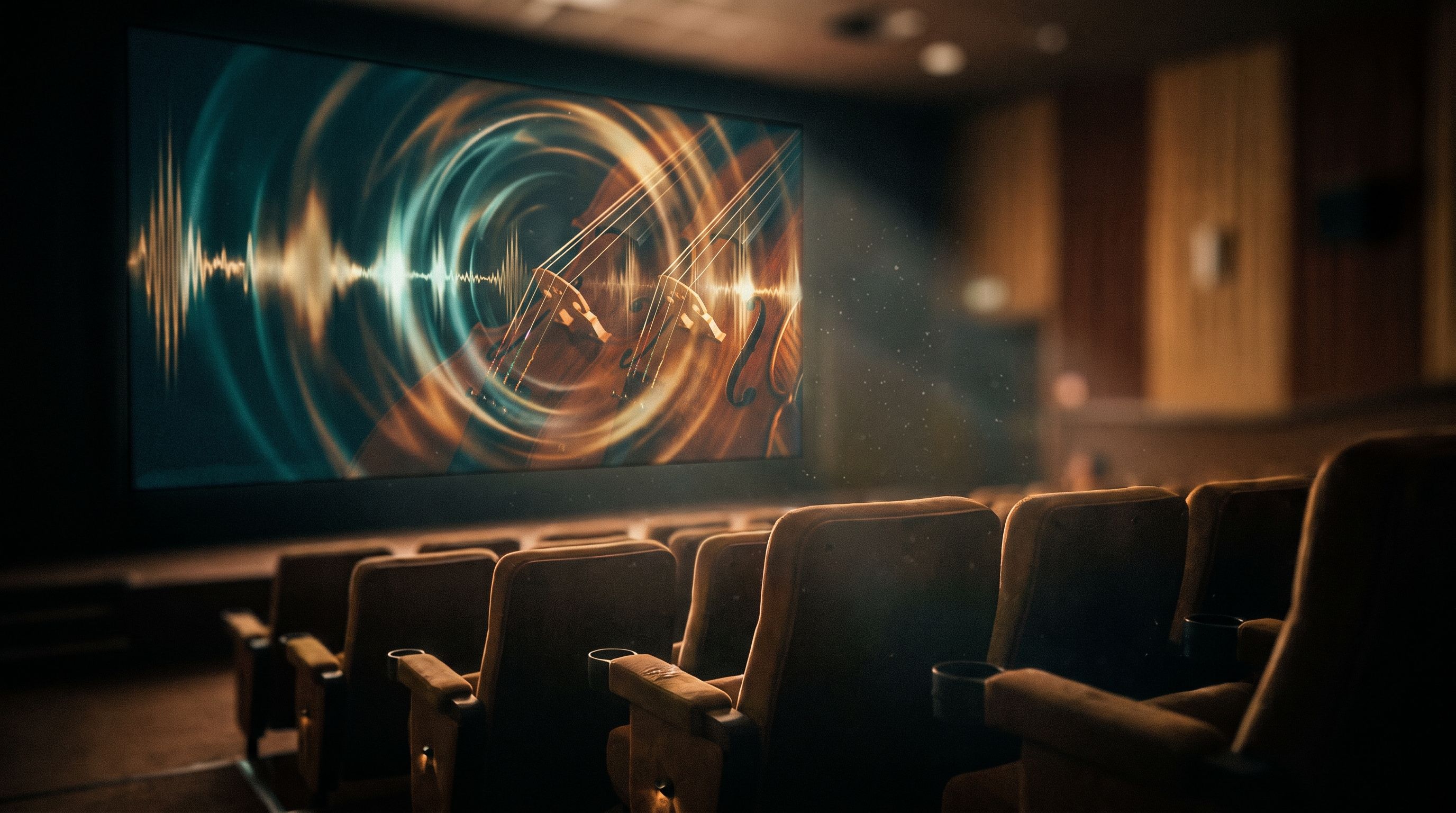
Film, television, and trailer editors live on deadlines—and music is often the last layer that makes a cut feel finished. AI music generation won't replace a bespoke score for a prestige feature, but it has become a serious tool for temp tracks, pitch reels, indie shorts, documentary underscore, and trailer builds where speed and mood matter more than a 90-piece orchestra on day one.
Where AI soundtracks fit in production Pre-visualization teams need something that *feels* cinematic while picture is still rough. YouTube filmmakers need tension under a monologue without licensing a famous cue. Trailer editors need rise-and-hit energy in hours, not weeks. AI can generate full arrangements from descriptive tags—"slow-burn orchestral dread," "uplifting piano swell 90 BPM," "percussion-only chase"—so directors hear intent before committing budget.
Cinematic tags that actually steer output Be specific about arc, not just genre. Instead of "epic," try "two-minute build from sparse piano to full strings, no vocals." Mention instrument families (brass stabs, muted strings, taiko hits), tempo, and dynamic shape (starts quiet, peaks at 1:15). For trailers, call out edit-friendly structure: "clear hit at 0:30," "breakdown before final chorus," "instrumental only."
Trailers vs long-form underscore Trailers reward instant recognition—rhythmic punctuation, braams, rises. Long-form TV and film underscore reward sustain and subtlety—beds that don't fight dialogue. Tag accordingly: "minimal harmonic movement under dialogue" for scenes with heavy VO; "aggressive hybrid percussion" for action sizzle reels.
Dialogue and mix headroom Music that competes with speech fails in the mix. Generate instrumentals or tag "no lead melody in midrange" when scenes are talk-heavy. Leave space mentally around 2–5 kHz where consonants live—sparse arrangements often survive a dub stage better than dense synth pads.
From temp track to licensed final Many productions start with AI or library temp, then commission a composer to replace it for release. That's normal. AI gets you to a approved emotional map faster. If your AI provider grants commercial use under their terms, some indie releases ship with AI-generated underscore entirely—especially documentaries, web series, and corporate films. Read licensing before festival submission or broadcast.
AAiMusic for cinematic workflows Describe scenes in plain language on Create with Aria — she turns a story beat into lyrics or instrumental direction, synced to generate. Generate dual takes and pick the mix that cuts best against picture.
Common mistakes Using twenty genre adjectives at once—models average them into mush. Ignoring edit length: a three-minute generation trimmed to forty seconds may have the wrong internal arc. Forgetting to audition on laptop speakers (where many execs first watch). Assuming AI replaces music supervision on union or major-studio projects—it usually augments indie and fast-turnaround work.
Mindset Soundtracks serve story. AI music is a fast path to emotional proof—the moment stakeholders say "yes, that's the vibe." Polish with iteration, cut ruthlessly to picture, and escalate to traditional scoring when the project scale demands it.
AAiMusic · Your imagination, your music
Keep reading
Related guides
 Industry & creators
3 min
AI Music for Indie Artists: Level the Playing Field
Why indie artists are turning to AI music—demos, full releases, and creative freedom without a big budget.
Read → Industry & creators
4 min
AI Music for Content Creators: TikTok, YouTube, Podcasts, and More
How creators use AI-generated music for Shorts, Reels, podcasts, and streams—workflow tips, quality checks, and why original AI tracks beat risky copyrighted clips.
Read → Industry & creators
3 min
AI Instrumentals: Background Music for Videos, Streams, and Projects
Create royalty-friendly instrumental beds with AI—tempo, mood, and genre tags that work for tutorials, games, and ambient content without vocals.
Read →