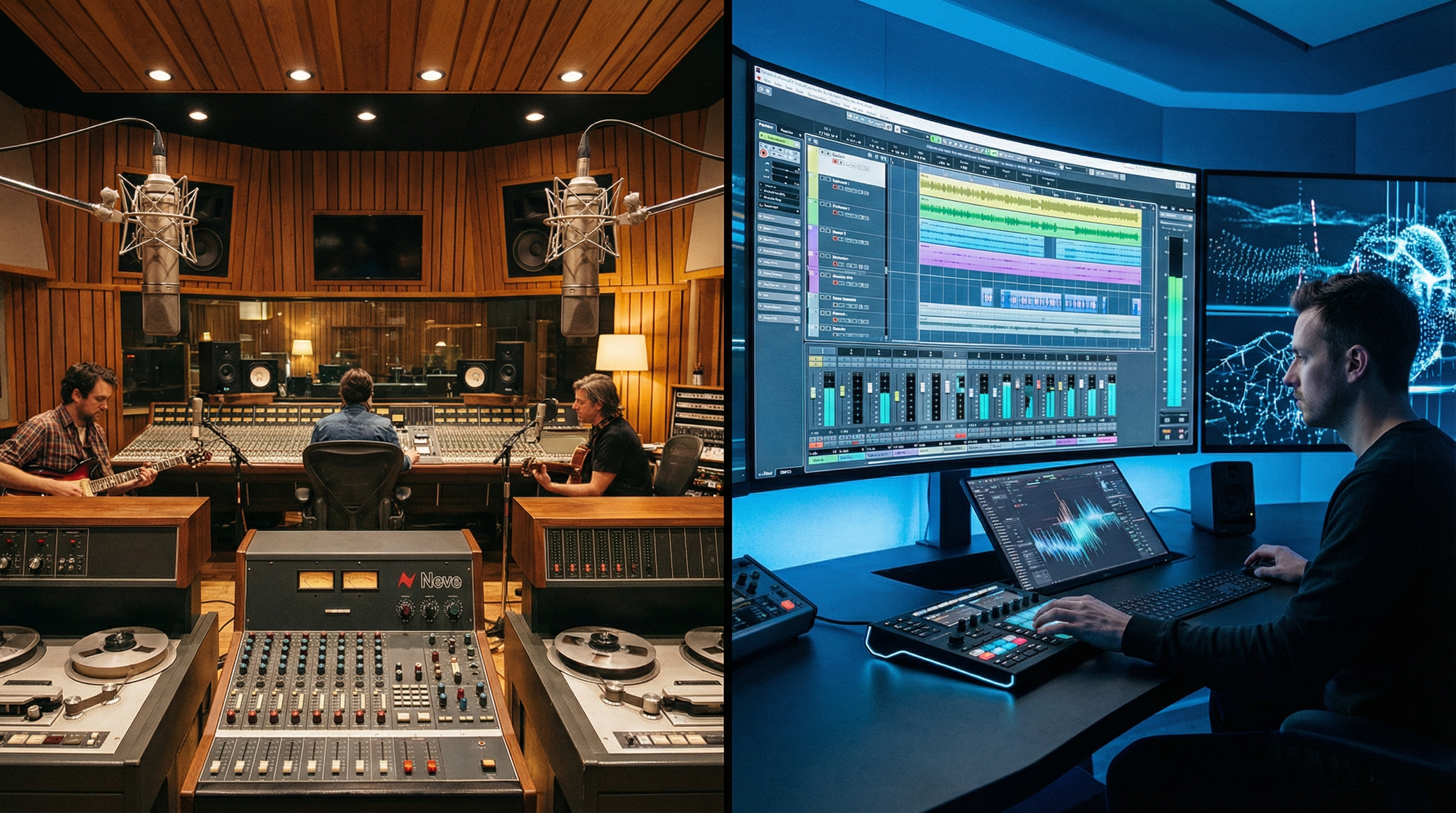
The fight isn't AI vs humans — it's which tool for which job. Traditional production and AI music now share the same creator laptops; the smart question is when each earns its place in your pipeline.
Speed and cost — honestly A full traditional production — musicians, studio time, mixing, revisions — can run weeks and thousands. AI turns structured lyrics and tags into a listenable master in minutes on a subscription you already pay for content tools. For sync pitches, social series, learning arrangement, or proof-of-concept before investors, AI wins on calendar math every time.
Control — two different dials Traditional gives you micro control: every take, every EQ move, every performance nuance. AI gives you macro control: section structure, genre, vocal character, emotional arc — then surprises you with details you didn't specify. Platforms like AAiMusic narrow the gap with Aria-led briefs, dual takes, Studio extend/reimagine, and stems for downstream DAW work. You're not locked out of editing; you're choosing where to spend human hours.
When AI music is the right call - Demos and pre-production before booking sessions - Content cadence (weekly Shorts, podcast themes, client reels) - Exploring genres outside your instrument skill - Multilingual versions without rebooking vocalists - Finishing ideas you'd otherwise abandon in Voice Memos
When traditional still wins Live ensemble feel you can hear instantly. Specific session players. Complex human groove that's cheaper to record than simulate. Projects where union, label, or brand mandates human credits. AI can temp those projects; it rarely replaces the final master on a flagship release.
The hybrid workflow most pros actually use Talk to Aria → generate AI draft → identify what's wrong (one lyric line, one tag tweak) → regenerate or extend → export stems → replace one element live (real bass, real vocal comp) → mix. AI removed the "can't afford to try" barrier; humans still polish the 5% that makes it feel expensive.
Budget framing for indie artists Think in outputs per dollar: if one credit yields a releasable instrumental bed for thirty videos, AI math beats a single stock license repeated across channels. If you need one timeless lead single with live strings, allocate traditional budget there and AI everywhere else.
Mindset shift Traditional production optimized for perfection on one asset. AI production optimizes for learning velocity across many assets. Neither identity is morally superior — they're different bets. Your career stage picks the mix.
Action step Take one song you're stuck on. Generate an AI version with honest tags. Don't judge it against your favorite album — ask: "Does this prove the hook?" If yes, decide whether the proof is enough to ship, extend, or take to a studio. That decision is the whole comparison in one move.
AAiMusic · Your imagination, your music
Keep reading
Related guides
 Fundamentals
3 min
What Is AI Music? A Complete Guide for Creators
AI music uses machine learning to generate songs from lyrics and style tags. Learn how it works, how it compares to traditional production, and how to get the best results.
Read →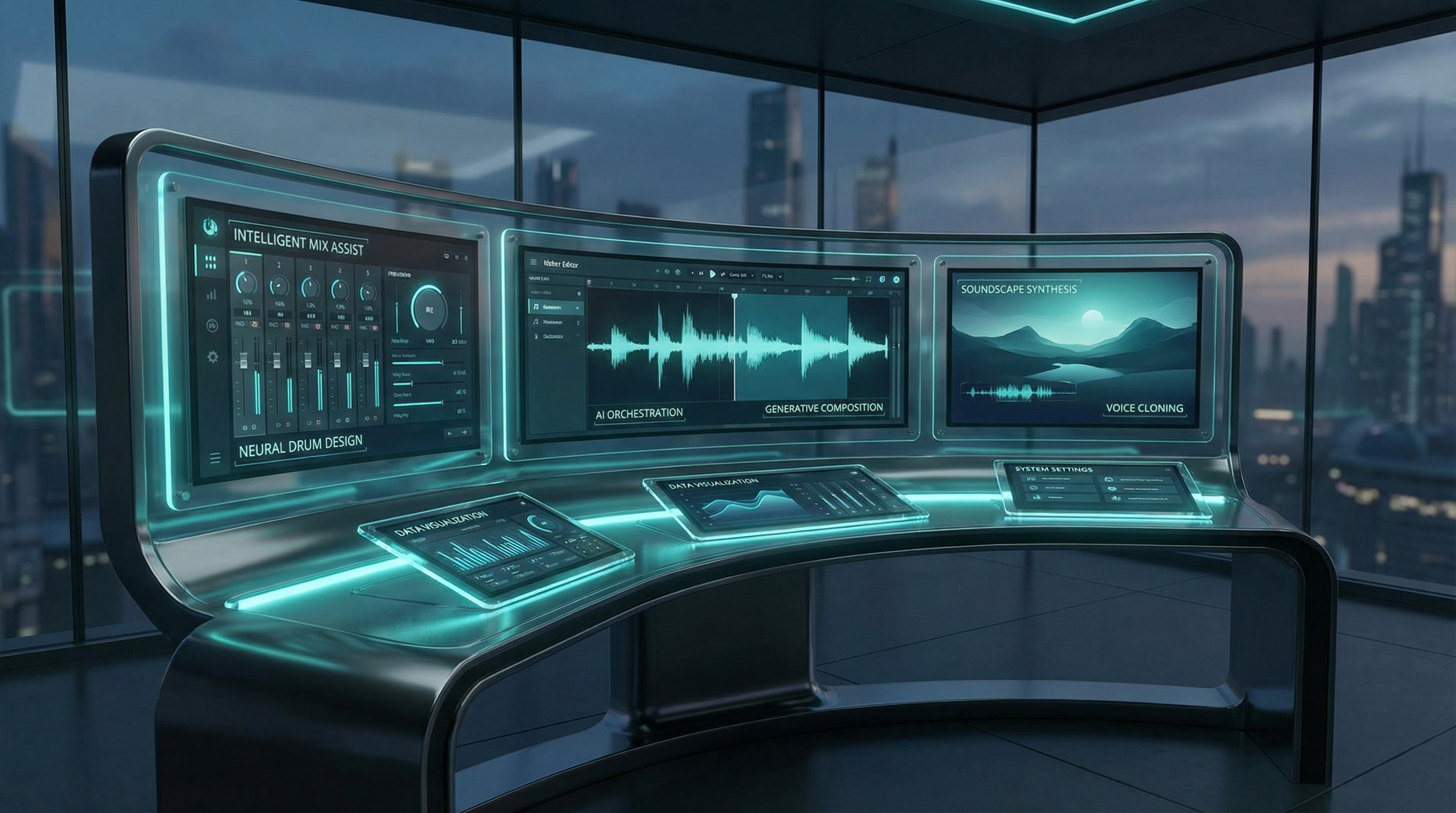 Fundamentals
3 min
Best AI Music Generators in 2026: Features and Comparison
A practical comparison of leading AI music tools: quality, control, pricing, and workflows. Find the right platform for your music creation style.
Read → Fundamentals
3 min
AI Music Trends 2026: What's Next for Creators
The biggest trends in AI music this year: better vocals, longer tracks, hybrid workflows, and how creators are using AI to stand out.
Read →