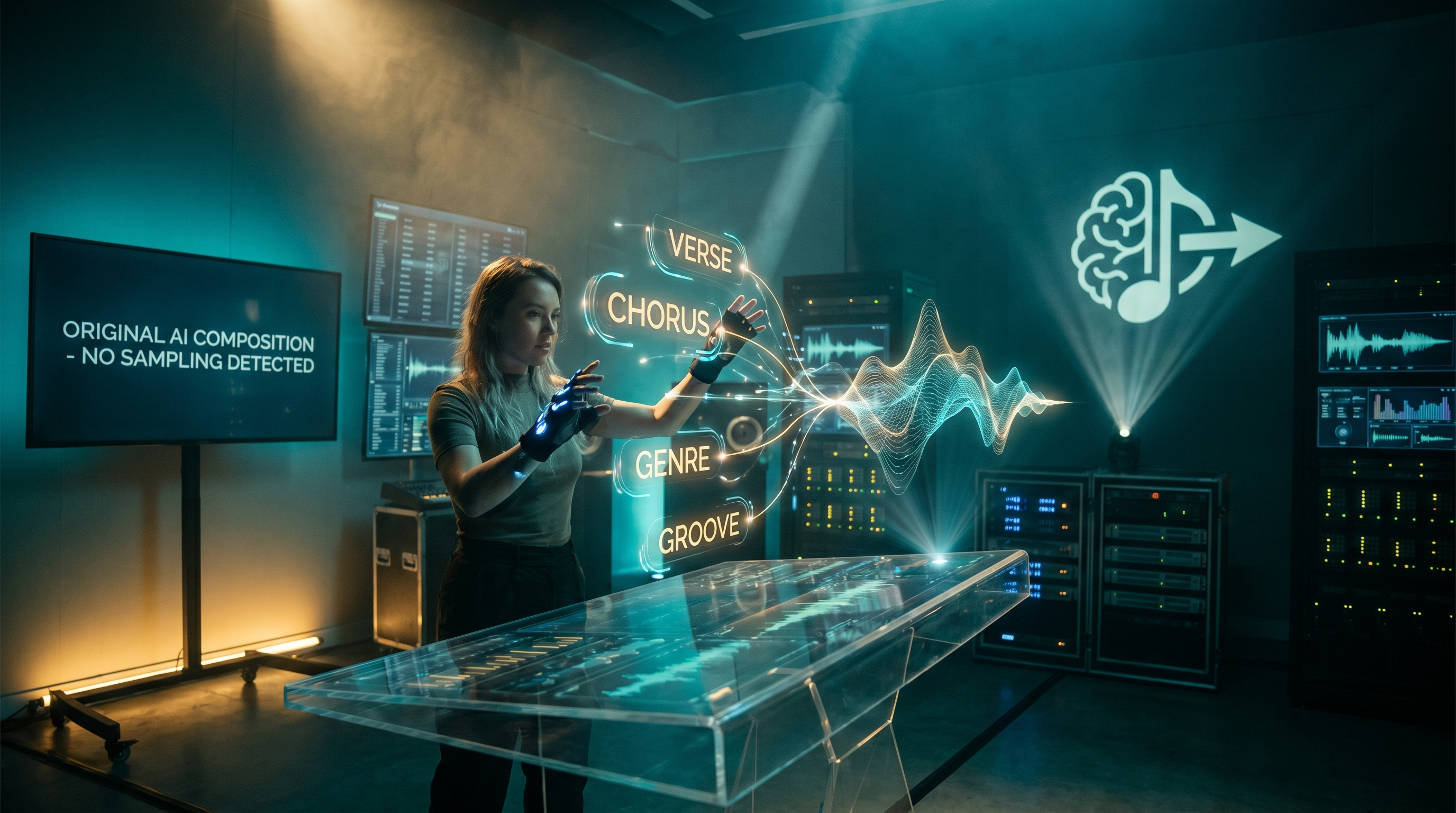
Online "remix" usually evokes chopping someone else's hit—which pulls sampling rights, master clearance, and label timelines into the picture. AI music offers another playbook entirely: you supply your lyrics, structure hints, and style vocabulary so the model renders new sound material. You're capturing vibe or groove—not cloning waveform-identifiable excerpts.
Remix energy vs sampling famous stems When people ask for a "trap remix" or "Latin-house rework," they're describing aesthetic territory you can reach through prompts—genre cues ("Jersey club drums," "reggaeton dembow-lite"), tempo, rhythmic bounce—not through dragging recognizable WAV stems through samplers without clearance.
Avoid prompts designed to impersonate a named artist or recite recognizable lyrical excerpts from chart singles—that crosses ethical lines and frequently violates platform policies regardless of AI intermediaries.
Structure drives remix-feeling productions Modern remix workflows prize recognizable skeletons: hooks, repeated rhythmic motifs, builds before drops. For AI generation, mirror dance-production intuition:
Anchor repeats Chorus-first placements plus symmetrical verses often feel remix-ready faster than sprawling narrative arcs.
Mark sections cleanly Use markers like [Verse], [Pre-Chorus], and [Drop Bridge]—models arrange transitions better when boundaries exist.
Describe rhythm explicitly Tags such as "syncopated claps" or "four-on-the-floor breakdown" steer percussion without mastering STEM edits on day one.
Licensing basics everyone should skim Read your AI provider's commercial use rules—streaming release vs Twitch soundtrack vs corporate keynote differs commercially even when technically feasible.
You're typically relying on contract terms, not DIY doctrine—know what's excluded (broadcast exclusivity windows, territories). AAiMusic expects your lyrical inputs and descriptive prompts; you're not uploading uncleared third-party masters as conditioning sources.
Don't paste entire copyrighted lyric sheets you didn't license—and don't feed identifiable trademarks into prompts meant for commercial branding unless your counsel cleared them.
Creative workflow end-to-end Start from a title or hook phrase—something chant-friendly if club energy matters. Draft verses with roughly matched syllable counts line-to-line so melodic contour stays predictable across sections.
Generate twice early—many pipelines yield dual takes (Take A / Take B). Audition both before locking lyrics you'd regret rewriting later. Iterate tags instead of rewriting entire songs first—sometimes tempo ±5 BPM or swapping "bright pop" for "dark pop" reframes results dramatically.
Export loudness references alongside mood references mentally—ear fatigue differs between headphone hype mixes and streaming normalization—trust repeated listens more than first impressions.
When legal counsel matters Broadcast sponsorships, multinational releases, film sync with distributor indemnities—those contexts deserve bespoke advice. This guide frames everyday creator workflows—not litigation strategy.
Closing thought Your remix-feeling AI track succeeds when listeners recognize your creative fingerprint—structure, lyrical stance, cadence—not when they mistake it for another artist's master clone. Push vibe forward with prompts and iteration; keep chains of ownership simple starting from words you wrote.
AAiMusic · Your imagination, your music
Keep reading
Related guides
 Songwriting
3 min
How to Write Lyrics for AI Music: Structure, Tags, and Tips
Lyrics for AI music work best with clear structure and style tags. This guide covers verses, choruses, bridges, and how to describe genre and mood so your AI song sounds exactly how you want.
Read → Songwriting
4 min
How AI is Changing Songwriting in 2026
From idea to finished song: how AI tools are reshaping the songwriting process for pros and beginners alike.
Read → Songwriting
4 min
Meet Aria — Turn Your Imagination Into Music
Aria is your AI music partner on AAiMusic: co-write lyrics in your language, shape your sound, and turn what you imagine into songs you keep in your Library — not generic AI filler.
Read →