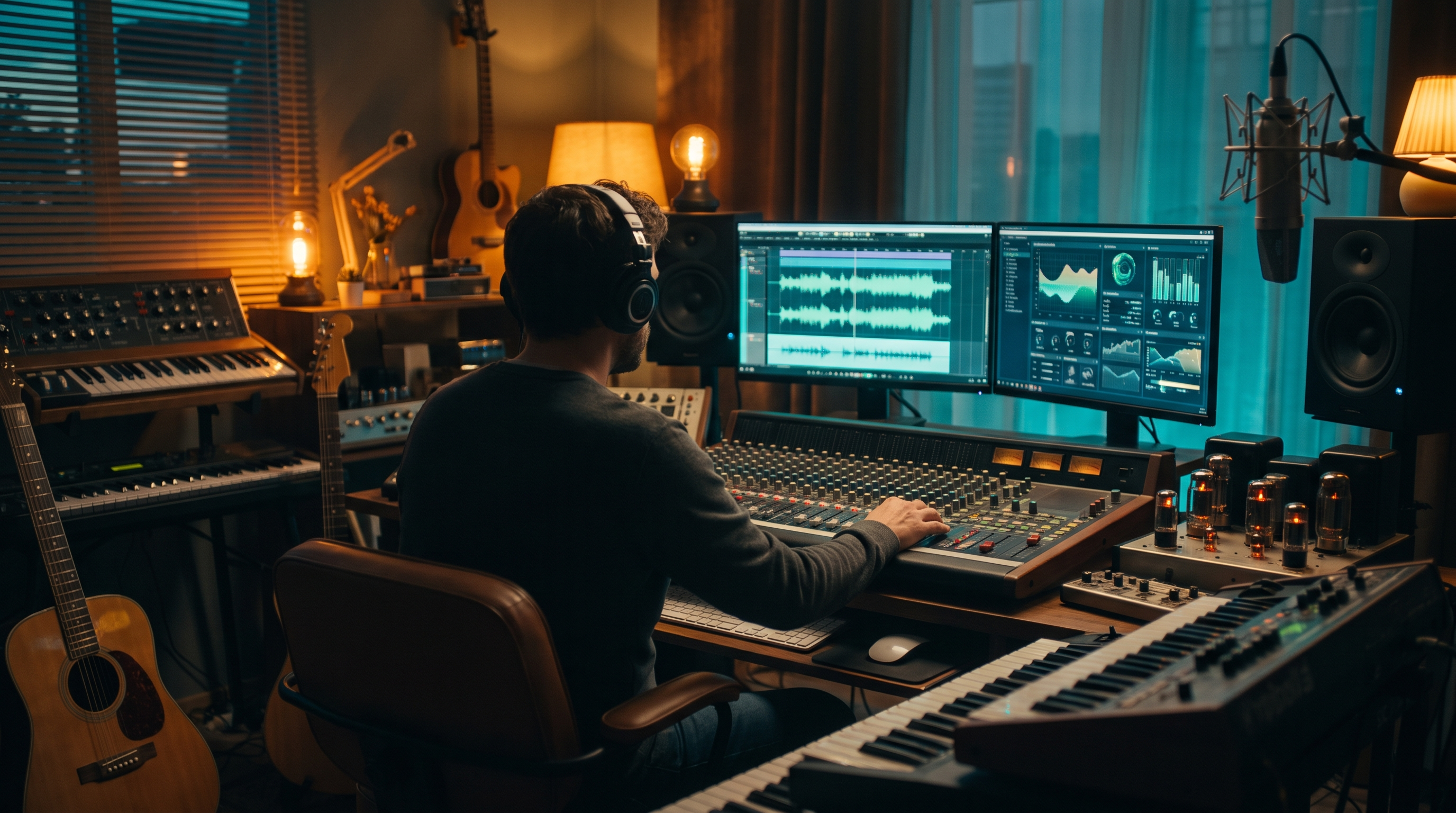
AI is very good at novelty. That is a problem if you want people to recognize you in a playlist. A catalog that sounds like five different radio stations is not "versatile." It is invisible.
Write down the three things that do not change Before the next generate, decide: - Vocal world — close and dry, or big and stacked? One lead, or room for a duet later? - Palette — two or three instruments you keep coming back to (warm keys, dry drums, a guitar that is never shredding) - Tempo neighborhood — not a single BPM, a range. 88–102 feels like one artist. 70 and 140 in the same month usually does not.
Put this in a note you reuse. When you talk to Aria, paste the three lines at the start of a new song: "Same world as my last two — close vocal, dry drums, 90s-ish. New story."
Reuse a voice on purpose If you are building a project that should sound like one singer, do not leave vocal direction blank every time. Name it. On Premier, virtual singer personas exist so the same timbre can walk through several singles. Even without a persona, repeating the same vocal sentence ("low male, a little tired, no belting") is cheaper than hoping the model remembers last Tuesday.
One variable per experiment Want a more danceable cut of a song you already like? Reimagine the groove. Do not also change language, gender, and title in the same run. Consistency is a science of *what you refuse to change*.
Titles and covers should look like siblings If every thumbnail is a different planet, the audio can be perfect and still fail. Keep a color or a framing habit. Album art for AI music is the visual half of this article. Listeners remember pairs: the gold-lit close-up, the same type of title, the same kind of chorus.
Build a small catalog, not a pile Five songs that share a weather is a project. Fifty one-offs is a folder. Use your Library as a crate: keep the ones you would play a stranger, archive the rest. Discover is useful here — listen to how curated galleries feel like a station, not a dump. Your own page should feel the same.
When you should break the rules A featured soundtrack, a joke birthday track, a language experiment for family — those can sit outside the project. Label them in the title so *you* know. The mistake is letting every experiment become "the new sound."
Where AAiMusic helps more than a prompt farm Other tools reset the universe every generate. AAiMusic keeps Aria, the Library, Studio finishing, and (if you want it) a singer persona in one house. You can write in 60+ languages without changing identity — language is audience, not a new artist, unless you decide it is.
If you want the short version: pick three constraints, talk to Aria like a producer who already has a record out, generate less, keep more. We built the studio so the next song can sound like it belongs next to the last one — and so you can start that catalog without renting a room for every idea.
AAiMusic · Your imagination, your music
Keep reading
Related guides
 Industry & creators
3 min
AI Music for Indie Artists: Level the Playing Field
Why indie artists are turning to AI music—demos, full releases, and creative freedom without a big budget.
Read → Industry & creators
4 min
AI Music for Content Creators: TikTok, YouTube, Podcasts, and More
How creators use AI-generated music for Shorts, Reels, podcasts, and streams—workflow tips, quality checks, and why original AI tracks beat risky copyrighted clips.
Read → Industry & creators
3 min
AI Instrumentals: Background Music for Videos, Streams, and Projects
Create royalty-friendly instrumental beds with AI—tempo, mood, and genre tags that work for tutorials, games, and ambient content without vocals.
Read →